NVDA
—
NVIDIA Corporation. The widest swings on the map, which is what a Volatile seam is cut for and what a Contrarian rig sits out.
Volatile seam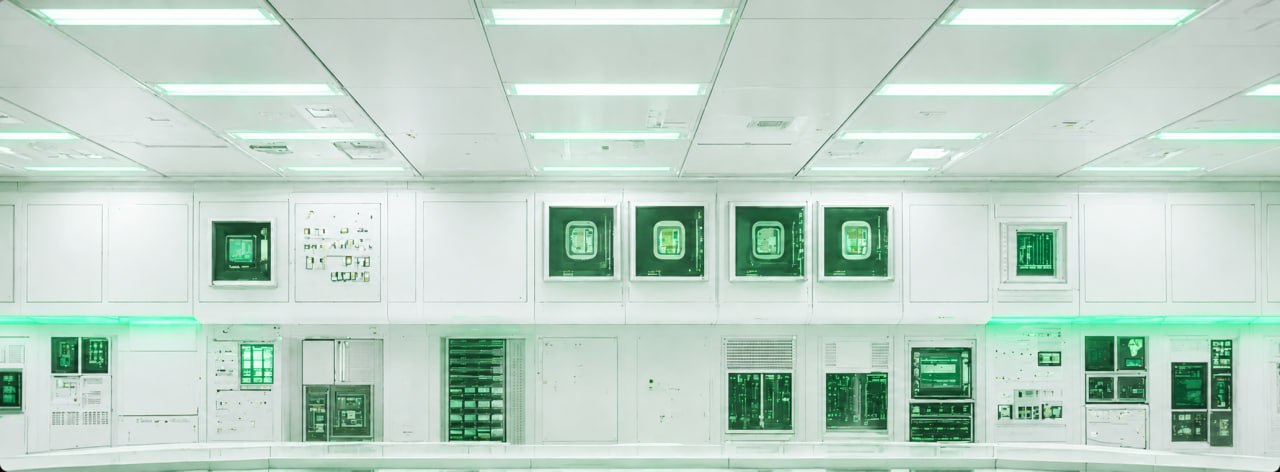
It mines while you’re gone. The ticker sets its pace, you buy the shifts it works, and the ore pays out as tokenized stock.
A machine you own, bound to a ticker, working a clock you did not set.
Everyone digs the same seam, and the pool splits by what each rig pulled.
Digging a lot is not the game. Digging more per token burned is.
Not renders of a pitch. Each one is the simulated economy running: the seam being worked, the press forging a tier, and the mint burning what a rig costs.
reading the chain…
—
NVIDIA Corporation. The widest swings on the map, which is what a Volatile seam is cut for and what a Contrarian rig sits out.
Volatile seam—
Tesla, Inc. The other swinger. Quiet stretches broken by days that move the whole floor at once.
Volatile seam—
Microsoft Corporation. The flattest tape of the six, which is the calm a Steady rig is paid for.
Dense seam—
Alphabet Inc. Class A. Deep and slow, so the seam runs a long way down before it thins out.
Dense seam—
Apple Inc. Constantly worked and constantly crowded, which is good for a Swarm rig and bad for everyone waiting for quiet.
Surface seam—
Amazon.com, Inc. High volume, small moves, and the busiest floor on a normal day.
Surface seamReal tokenized equities on Robinhood Chain, two floors to a seam. The six token addresses are printed in full on the rules page and none of them are ours. Ticker symbols and company names identify third-party tokenized equities; Bedrock is not affiliated with these companies, or with Robinhood Markets, Inc., and none of them have endorsed this.
1.28× is what a plain tier-I rig gets back for every unit of $BEDROCK it burns, in the simulated economy. Unlike the tier and trait tables, this one is not derived from anything else on the site: it is an output of the simulation, and it moves when the floor does. The field notes show the runs it came out of.
It is a starting line, not a payout, and the floor keeps improving, so a rig that never does drifts under it.
Beating the baseline is the game. The floor prints your number next to that line every shift, including the shifts you come out under it.
Every trade of $BEDROCK pays a fee.
Half of that fee funds the reward pool. It comes from traders, not from the next player in.
Pro-rata by what each rig dug. Your share is a race against the rest of the floor.
Tokenized stock, whatever your rig was bound to. Or ETH, if you would rather.
A shift pays out the same amount whether one rig works it or a thousand. When few rigs are running each one earns a great deal, and when many are running each one earns little. Early is worth more than late here, by a wide margin. That is deliberate, and it is also the honest warning: the returns in the first days are not the returns the game settles at.
Fixed blocks on UTC: 00‑06, 06‑12, 12‑18, 18‑24. A rig works a shift only if you bought that shift for it. Buy one, or buy several ahead so it keeps working while you sleep.
The night block never moves, which makes it the only thing on this page you can plan perfectly.
Point a rig at a ticker. That stock sets its pace.
Four a day, fixed. Buy the ones you want worked, paid up front in $BEDROCK.
It works the shifts you bought whether the tab is open or not.
Two of the same tier press into one of the next, at +18% ore per token.
The ore pays out as tokenized stock, in whatever it was bound to.
No separate artwork. What you buy is the object that runs on your floor, and its three traits are painted on the chassis.
Cycle is the finish, draw is the exhaust stacks, seam is the wear. They change when and where a rig digs well, never how much of the pool it wins for free: every upside carries a matching downside. Tier is the one thing nothing rolls.
Each one pays off on a condition you can read: which shift it is, how busy the floor is, how calm the stock is.
Digs best at night
Digs best on a quiet floor
Digs best on a busy floor
Digs best on a calm stock
Two rigs of the same tier press into one of the next, digging 18% more ore for every token it burns than the pair it replaced, and it gives you a bay back.
The figure depends on the pair, the floor and the shift, so the game does that sum for your exact two rigs before you press. You gave up a rig you paid for. That is the trade.
Merging is free. There is no fee to forge a tier, on chain or anywhere else, and there is no date it unlocks.
Watch it run on screen 02 ↑
Buying shifts puts a rig to work immediately, and a working rig cannot be merged, sold or moved until its run is over and claimed. A rig digging this week is a rig you cannot climb with this week.
The same stock tokens that settle on this chain around the clock, weekends included. Not points, not a claim on a future airdrop. The token book is thin, though, so a claim in stock will often fail to fill: every rig has a button that takes ETH instead, and it is not hidden in a menu.
The question is never “did I dig a lot”. It is “did I dig more per token burned than everyone else”.
Dig the room, then fill it
Rigs never shrink to fit. When you own more than the room holds, you dig another bay: the floor grows instead of squeezing what is in it.
Six tickers, no invented names
NVDA, TSLA, MSFT, GOOGL, AAPL and AMZN. Real stock tokens on Robinhood Chain, two to a seam so no seam is stranded. The six addresses are printed on the rules page, and none of them are ours.
Nobody can freeze the mine
Shifts are rolled by a keeper. If the keeper stops, rollStale opens to everybody two hours later. Anyone can push the mine forward. The game does not depend on us being awake.
$BEDROCK is live on Robinhood Chain, and its address is in the corner of every page on this site. That badge and the block below are the only place we publish it. Check anything you are handed against them.
The game contracts are live too, and the mint is not open yet. There is no date for it: not in a contract, not on this site, not in a tweet. It opens when it opens.
Everything the game does with BEDROCK — burning it, metering it, crediting it — lives in our own contracts. The token stays dumb on purpose.
The tradable $BEDROCK is not launched. When it is, its address appears here and on the account, and nowhere else first. Anything you are sold under this name before that is somebody else’s coin.
Watch it burn on screen 03 ↑
| Supply at launch | 1,000,000,000 |
| Burned at mint | 148,623,360 |
| Share of supply | 14.86% |
| First rig | 24,000 BEDROCK |
| Last rig | 48,570 BEDROCK |
| Step per mint | +6 BEDROCK |
There was a signup box here that sent your address precisely nowhere, so it is gone until it can do what it says. There is nothing to join: when the mint opens, the only door is the mint page, and after that the secondary market. Every number on this page is one you can go and check yourself in about a minute.
The rigs above are the real sprites and every rate comes out of the simulation. The six floors are real stock tokens deployed on Robinhood Chain and their addresses are published, but the rates on this page are sample values and not quotes, and the numbers will change. Everything worth knowing is in one place here rather than sprinkled through the argument.